

Two seismic events shook the world on May 8, 2025: one spiritual, one political, both reverberating across continents. The date already carried historical gravity: it marked the 80th anniversary of Victory in Europe Day, commemorating the end of World War II in Europe after Nazi Germany surrendered to Allied forces. That day, the Vatican named its first-ever American pope, and the U.S. finalized a sweeping new trade agreement with the UK; two synchronized moves that echoed across borders and underscored the symbolic weight of the moment. Was this a coincidence or a symbolic recalibration?
The first: the Vatican elected an American pope for the first time in its two-thousand-year history. Robert Francis Prevost was born in Chicago, shaped by the resilience of working-class neighborhoods and the steady rhythm of Midwest values, then seasoned through years of missionary work in the hills and parishes of Peru—where he built trust in communities that had every reason to be skeptical of outside authority. He stepped into the papal role and chose the name Leo XIV—not Francis II, which might’ve seemed the obvious continuation, given that Francis is already his middle name and he succeeded Pope Francis.
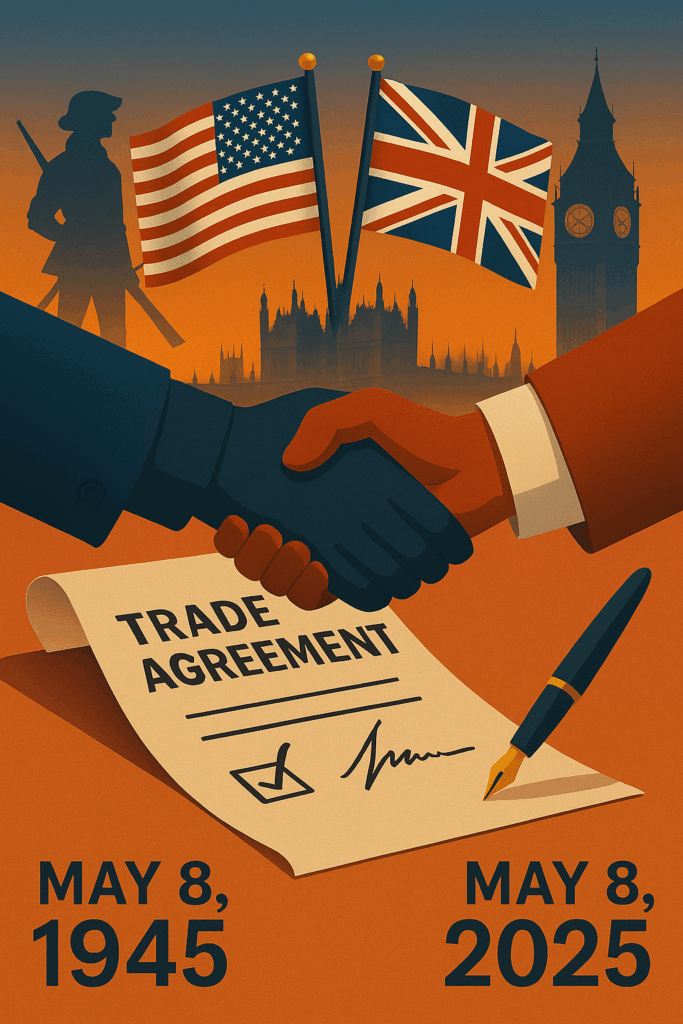
The second event? Trump inked a new UK–US trade agreement—another gesture rich with symbolism, as two wartime allies reconvened to sign a modern pact on the same date they had once stood side by side to liberate Europe. A big handshake on Victory Day. The choreography of it all was uncanny—history didn’t just rhyme, it synchronized in full ceremonial unison.
From Midwest Missionary to Leo XIV:
A Deliberate Papal Pivot
Coming off the heels of this symbolic one-two punch, make no mistake: Robert Francis Prevost is no placeholder pope. The Vatican didn’t just elect an American for novelty’s sake. And I’ll say this loud and clear: I highly doubt the U.S. had any influence in this decision. No backroom diplomacy. No lobbying behind the walls of the Sistine Chapel.
This wasn’t America pulling strings—it was no puppet papacy. Unlike past papal elections that leaned on tradition or sought to stabilize internal dynamics, this choice felt outward-facing—global, deliberate, and undeniably strategic. This was the Vatican moving a king across the global chessboard, each move intentional. Perhaps its boldest geopolitical chess play in recent memory.
And the logic? It’s potent.
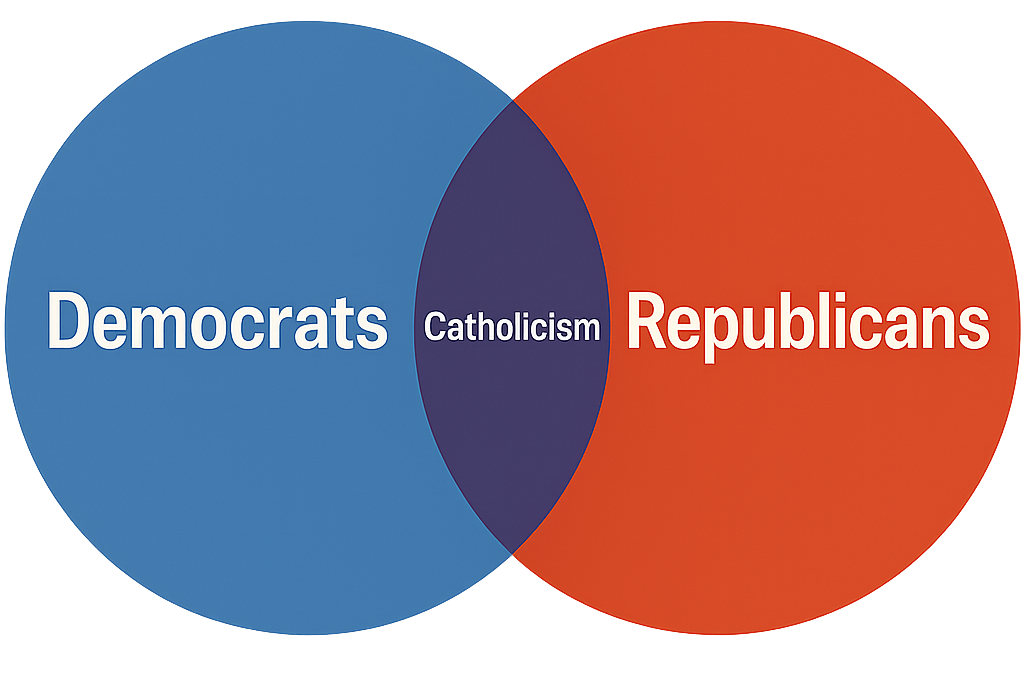
The Catholic Church is rapidly losing relevance in parts of Europe, like Germany, where over 500,000 people formally left the Catholic Church in 2022 alone—a record-breaking number that highlighted growing disillusionment. But the Church remains vibrant—if divided—in the Americas. In the U.S., Catholics make up roughly 23% of the population. That 23% is practically split down the middle: half Democrat, half Republican. A spiritual Venn diagram of America’s own schism.
In Latin America, the Church is even more deeply rooted. Brazil, Mexico, Colombia, Peru—the faith runs deep. And Pope Leo XIV spent decades there, deeply embedded. He understands not just the language, but the unwritten rules of everyday life—what people expect, how they relate, and what truly holds a community together.
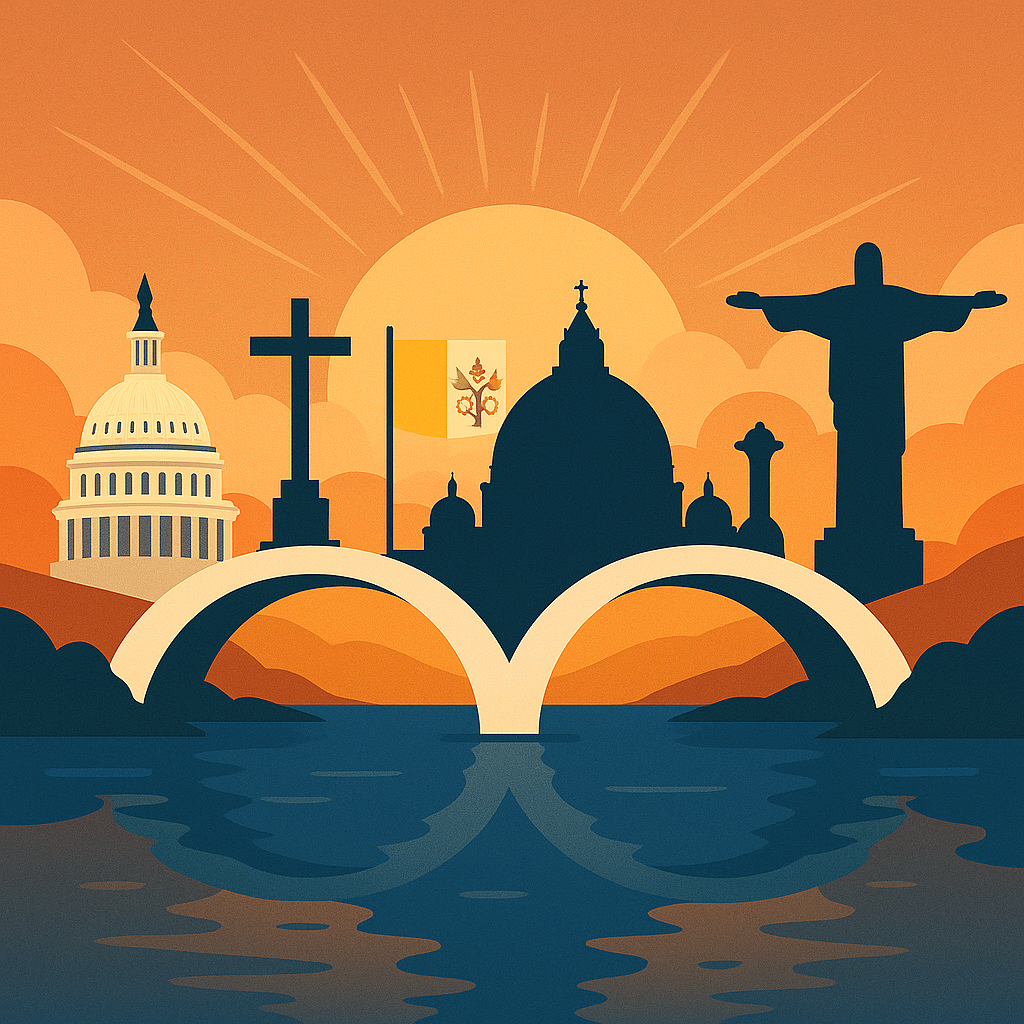
Pope Leo XIV is a symbolic bridge between North and South America. Between old-world Rome and new-world fervor. Between tradition and adaptation.
From Victory to Vibes: Trade, Allies, and the Strange Dance of Nations
The other headline of the day—this new Trump-era trade deal with the UK—came stamped with a history lesson. May 8, 1945, Victory in Europe Day. May 8, 2025, a trade pact between the two nations that once stormed Normandy together.
You could almost call it poetic if it weren’t for the way it felt so perfectly—almost suspiciously—synchronized.
It’s remarkable, too. The United States started a war exactly 250 years ago—the American Revolution began in 1775—to sever ties with the British monarchy. And yet, on the anniversary of their greatest shared victory, the two nations stood side by side again, not in defiance but in alliance. If history doesn’t repeat, it certainly rhymes—and sometimes it signs new trade agreements. Now, over two centuries later, the U.S. signs a deal with its old landlord while calling it a “historic partnership.” Friends again. But also frenemies, depending on the quarter.
These moments make you question where power actually resides. Who’s leading, who’s following, and what is being signaled to the world?
Which brings me to… blinkers. Because in a world where treaties and traditions signal shifts as subtly as a car indicator, the metaphor suddenly feels less like a stretch and more like a lens.
From Blinkers to Wedges: When Signals Stop Flashing and Start Flowing
If you’ve driven a modern car lately, you’ll notice that blinkers don’t really blink anymore. They cascade. They move. Instead of the classic tick-tick-tick, we get a flowing wedge of light that sweeps across the direction of the turn.

They’re not just alerting anymore.
They’re indicating.
And maybe that’s the new language of power. The Vatican isn’t blinking. It’s indicating. Through movement, not noise. Through symbolism, not slogans.
Even the political compass feels off-kilter. In Europe, ‘left’ often implies social democracy, secularism, and expansive welfare systems—views that in the U.S. might be labeled as progressive or even radical. Meanwhile, what’s considered ‘right’ in the U.S.—individual liberties, free-market capitalism, and religious conservatism—can veer further than the mainstream European right. So when the Vatican, seated in Rome, makes a move, it can land differently depending on who’s interpreting it. It’s all about cultural framing—and often, deeply misunderstood.
In his recent appearance on The Daily Show with Jon Stewart, Dutch historian Rutger Bregman distilled the modern career dilemma into a powerful framework he calls moral ambition. He warned how bright, idealistic minds—those who begin with a desire to improve the world—often get rerouted into what he dubs the “Bermuda Triangle of Talent”: consultancy, corporate law, and finance. These aren’t inherently bad paths, Bregman noted, but they often replace long-term purpose with short-term performance. It’s not malice—it’s drift. People don’t flip values overnight; they blink, compromise, and slowly trade vision for stability, activism for advisorship, impact for deliverables.
So many of our systems signal virtue but deliver inertia—think ESG strategies that promise sustainability but get lost in shareholder appeasement, or tech platforms that preach openness while locking down ecosystems.
And yet, amid all this static, came a move that felt like a true signal. A papacy not wrapped in rhetoric, but embodied in intent. One that didn’t just check the box of diversity or symbolism, but realigned the Church’s compass.
A Papacy in Motion
In a world full of symbolic gestures and strategic silence, this one stood out. A papal decision that didn’t whisper compliance or echo convention—it turned. It pointed. It moved.
Pope Leo XIV didn’t blink. He moved. The Vatican made a directional choice, not a cosmetic one.
This isn’t about the U.S. gaining favor. It’s about the Church shifting balance.
From blinking to indicating.
From tradition to transition.
From Francis to Leo—by choice, not lineage.
So now we watch—not for the next blink, but for where the wedge leads, echoing the deliberate move made on Victory Day, and the quiet resolve of Leo XIV stepping forward from the shadows of tradition—and whether the Vatican’s directional choice sets the Church on a new global path or simply signals the turn.
What's on your mind?