

On PMOS, chess, ego, and why human unpredictability changes the game
Sometimes the machine is the easy opponent.
That sounds ridiculous when you’re talking about chess. A chess engine can calculate positions at a level no human can realistically match. And yet, after spending some time playing against computers, I’ve discovered something uncomfortable: losing to a machine doesn’t bother me nearly as much as losing to a person.
That thought has been sitting somewhere in the back of my mind while I experiment with Microsoft Copilot Cowork, build my own little Product Manager Operating System (PMOS) and, somewhat unexpectedly, pick chess back up again.
Two very different experiments; one surprisingly similar lesson.
Building a second brain for work
I’ve been quite happy with my experiments with Microsoft Copilot’s Cowork functionality. I’ve built what I call PMOS, my Product Manager Operating System since I have Cybersecurity, Data & AI in my portfolio.
The idea is fairly simple. I give it my main goals and provide the information it needs to understand where I stand. Somewhere else in Microsoft 365, I’ll keep track of the actual progress and data; PMOS then uses that information to give me a recurring overview.
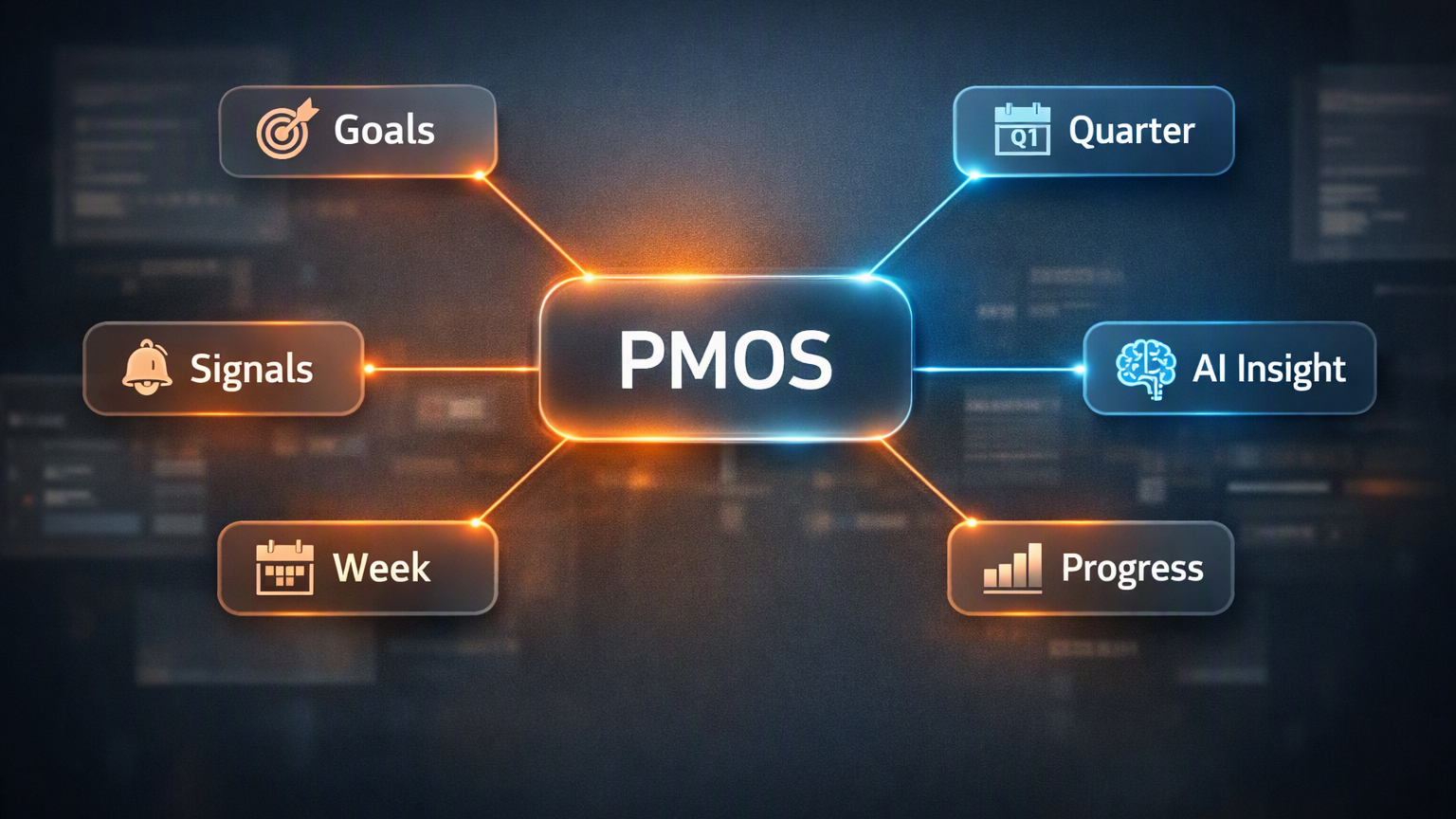
Every working day, I get an email about the relevant period. On an ordinary Tuesday, that’s simply my day. On Monday, it expands into a weekly overview. On the first day of a new month, it adds the month. And when a new quarter begins, it zooms out again.
I quite like that idea.
Not because I’ve suddenly outsourced my job to AI. Quite the opposite. I’m experimenting with what happens when I give an AI system enough context, structure and objectives to help me see my own work differently.
It becomes a kind of operating layer around the work.
And then there is chess.
The human factor
I’ve played chess since primary school. It was taught at school, and as I remember it, there was one other guy and me who were at the top of the class. People would gather around our games and watch us play.
I’ve recently picked it up again, partly because I’ve been playing with my sons. My middle son was, and still is, seriously good; at one point he was even a champion in the African leagues.
I started again on Chess.com somewhere around an 800 Elo rating. Before playing too many humans, I did what any sensible modern chess player does: I watched a ridiculous number of videos.
Tactics. Strategy. Openings. Blunders. Endgames. You name it.
Then I played bots.
And I discovered that I could usually beat a 1,000-rated bot, sometimes even stronger ones. So naturally, when my son encouraged me to start playing actual people again, I thought: well, this should be fairly easy.
It wasn’t.
My first human opponent was somewhere in the 800s. I lost. I made several mistakes, including eventually losing my rook by presetting my move. What struck me afterwards, though, was that the game had been roughly balanced for most of the time. The analysis bar had been hovering around zero.
Then that one mistake after his attack in move 33 changed everything.
I resigned. And my Elo dropped by more than a hundred points.What?
I had somehow imagined that ratings moved by five or ten points at a time. Instead, after only a handful of games, I had fallen dramatically.
Chess engines are extraordinary examples of narrow AI. They are incredibly good at one particular thing. A sufficiently powerful chess engine will see things that I simply cannot see.
So I thought: fine. Let’s start lower.
My next opponent was around 680.
And I blundered my queen in the fifth (!) move.
That one still hurts.
I wasn’t even making some sophisticated calculation error. In my head, I had constructed a little sequence: do this, then he’ll take, then I’ll exchange queens. Except the position didn’t actually support the brilliant little plan I had invented.
I just gave him my queen.
And that was when I started thinking less about chess and more about humans.
Because I don’t mind losing to a bot.
The machine doesn’t care
I’ve watched clips of Magnus Carlsen taking on extremely powerful engines, essentially exploring how long a human can survive against something operating at a level far beyond human play.
And sometimes, while watching these analyses, I surprise myself. I can actually anticipate a strong move. Not necessarily the obvious move, but sometimes the move that the engine confirms as best.
Then, inevitably, I make a couple of blunders myself.
My ego gets checked.
Literally.
But here’s the strange part: losing to the machine doesn’t feel the same.
The machine doesn’t care.
There isn’t some tiny silicon consciousness inside my laptop throwing a party because Mike just blundered his queen. There is no opponent sitting on the other side thinking, What an idiot.
It’s just calculating.
A human opponent is different.
When I blunder my queen against a person, somebody actually sees it happen.
And somehow that changes my physiology.
My heart rate goes up. I become more nervous. My mindset changes. I care more.
It’s not that I’m terribly nervous. But I notice it. The body knows there is another human being on the other side of the board.
And perhaps that’s the interesting bit.
The chess position hasn’t changed.
The pieces are still the same. The legal moves are still the same. The mathematics is still the mathematics, but:
my experience of the game has changed because there is another human mind involved.
That is a fascinating distinction.
From chess engines to AI
It makes me wonder what happens as we move beyond narrow AI.
A chess engine is relatively easy to understand philosophically. It is extremely intelligent within a very narrow domain, but it doesn’t care whether I feel embarrassed after losing my queen on move three.
Humans do.
Or at least we believe they do.
And that difference becomes much more interesting when we move from narrow AI towards increasingly general systems, and eventually whatever comes after that.
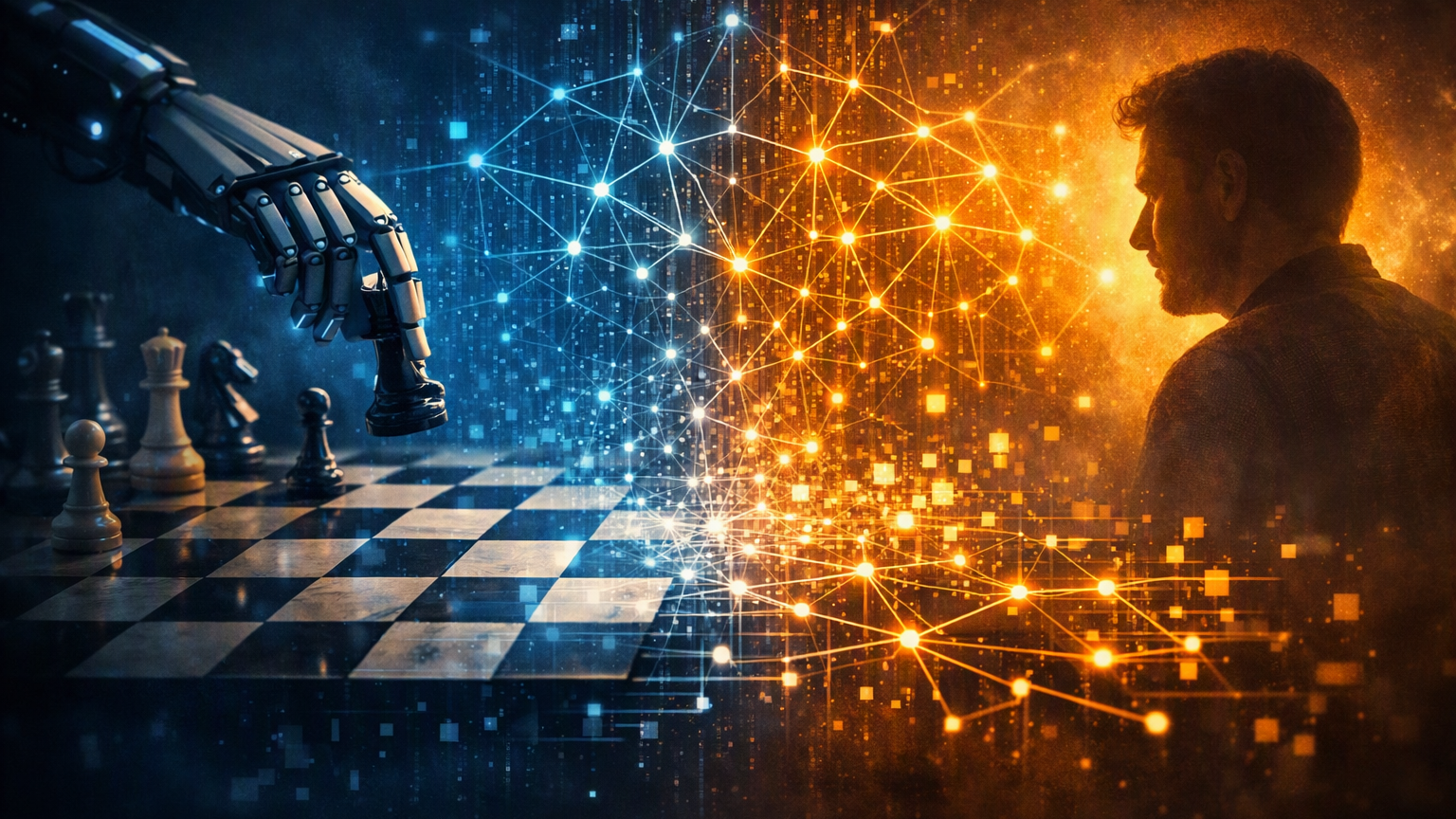
We often talk about AI in terms of intelligence: how much it knows, how fast it reasons, how well it performs.
But perhaps another dimension matters just as much.
How does its presence change us?
That’s what I’m experiencing with both of these experiments.
With PMOS, I’m deliberately putting AI inside my own workflow. I’m giving it goals, context and information so that it can help me understand my work.
With chess, I’m putting myself opposite an intelligence and discovering that the identity of the opponent changes my own behaviour.
The machine changes what I can do.
The human changes how I feel.
And somewhere between those two sits a rather interesting question about the future of human-machine interaction.
Perhaps the most important variable isn’t always what the machine does.
Sometimes it’s what we become when we know something else is looking back at us.
Even if it’s only a chessboard.
What's on your mind?