

Continuity 2026 brought together professionals from the public and private sectors to explore digital resilience, cybersecurity, business continuity, and digital transformation. Held in Groenekan on October 7, the event combined keynotes, panels, and expert conversations.
For me, this edition was different. At Continuity 2025, I was on stage as a speaker. This year, I worked behind the scenes as part of the Program and Sessions teams. Helping shape the agenda and participating in the preparations meant I had seen several themes develop long before they reached the stage.
What struck me on the day was how often speakers from very different backgrounds arrived at a similar conclusion: better outcomes depend on how people interact, collaborate, and make decisions.
Jitske Kramer provided the foundation with a simple but significant observation: system change is culture change. Her metaphor of the square and the round captured this particularly well. The square represents structures, governance, processes, and formal organization. The round is about relationships, identity, meaning, and informal influence. Organizations often change the square while neglecting the round, only to discover they have created a new structure with old behaviour.
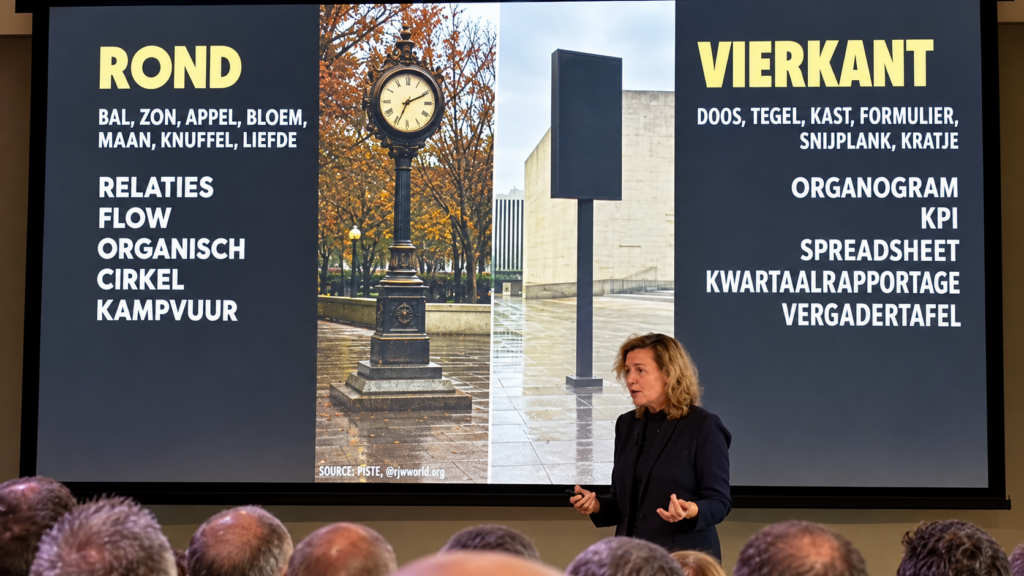
The other sessions approached that tension from different directions. Jasper Hoekstra of Victa showed how generating AI ideas is relatively easy, while turning them into measurable business value is not. Adoption, ownership, governance, and process change determine whether an experiment ever becomes part of daily operations. Discussions around AI governance and digital sovereignty raised the same underlying questions about responsibility, resilience, and organizational maturity.
Beyond Your Own Expertise
Another great keynote was Francesco Wessels’ TeamNL perspective on leadership and performance. His distinction between multidisciplinary and interdisciplinary teams stayed with me. Bringing specialists together is not enough; the real value appears when they understand one another’s perspectives and actively strengthen each other’s work.
Another metaphor made that point tangible: a brick has six sides, but most people only see two or three. Every perspective is incomplete. Better decisions emerge when we remain curious about the sides we cannot see ourselves.
Several conversations reinforced that lesson. One remark that stayed with me was, “People rarely need more power; they usually need to show more courage.” Someone added an important nuance: courage also needs backbone. Stepping forward is one thing; continuing to stand when pressure arrives is another.
The AI panel offered a glimpse of how the interaction itself may change. Nova, the AI assistant of Rens de Jong, joined the live discussion. The interesting question was no longer simply what AI can do, but what happens when it becomes part of the way teams interact and make decisions.
Looking Beyond Your Lane
Continuity 2026 did not fundamentally change my thinking. It reinforced something I have believed for a long time.
One reason I felt at home at Winvision was its understanding of the round: relationships, trust, identity, and human connection. Technology mattered, but people mattered at least as much. Across the sessions at Continuity, I heard that belief reflected in different ways. Whether the subject was culture, AI, governance, legal, leadership, or resilience, progress depended on connecting people and perspectives.
That also describes the value I try to bring. I do not need to be the deepest expert in every room. More often, my role is to connect people, ideas, and domains so that better decisions can emerge.
The topics at Continuity 2026 were diverse, but the real theme was what happens when expertise connects: become excellent in your own field while staying curious about the fields around you.
Stay in your lane, but look beyond it.
There was one more encouraging thought. Winvision became part of Previder, a company that historically felt more square to me. Today, I see more attention for the round as well: not only structures and processes, but also relationships, collaboration, and culture.
Perhaps Previder is becoming more all-round. Just like me.
Being asked to join the program board for Continuity 2027 feels like a natural next step. Hopefully I’ll see you there.
What's on your mind?